
PAWS: A Pause From Stress
PAWS (as in “pause”) is a mobile app concept built around a single idea: when people are stressed, they want a moment of relief that doesn't feel like work. PAWS delivers that relief through Frodo, a cute dog companion who checks in on your mood, listens when you want to vent, and offers small, playful "pauses" throughout your day.
This case study walks through how PAWS went from a stress statistic to a tested high-fidelity prototype.
Problem
I started with a simple but sobering data point: a 2025 Gallup study found that 48% of U.S. adults experience daily stress.
As chronic stress takes a toll on mental and physical health, managing it isn't optional. But "help people manage stress" is too vague a brief to design against, so I investigated what was failing people first.

Research
-
![]()
Research Questions
How do people experience stress day to day?
What are they currently doing to cope with it?
What kind of support do they actually want?
What's stopping them from using existing tools?
-
![]()
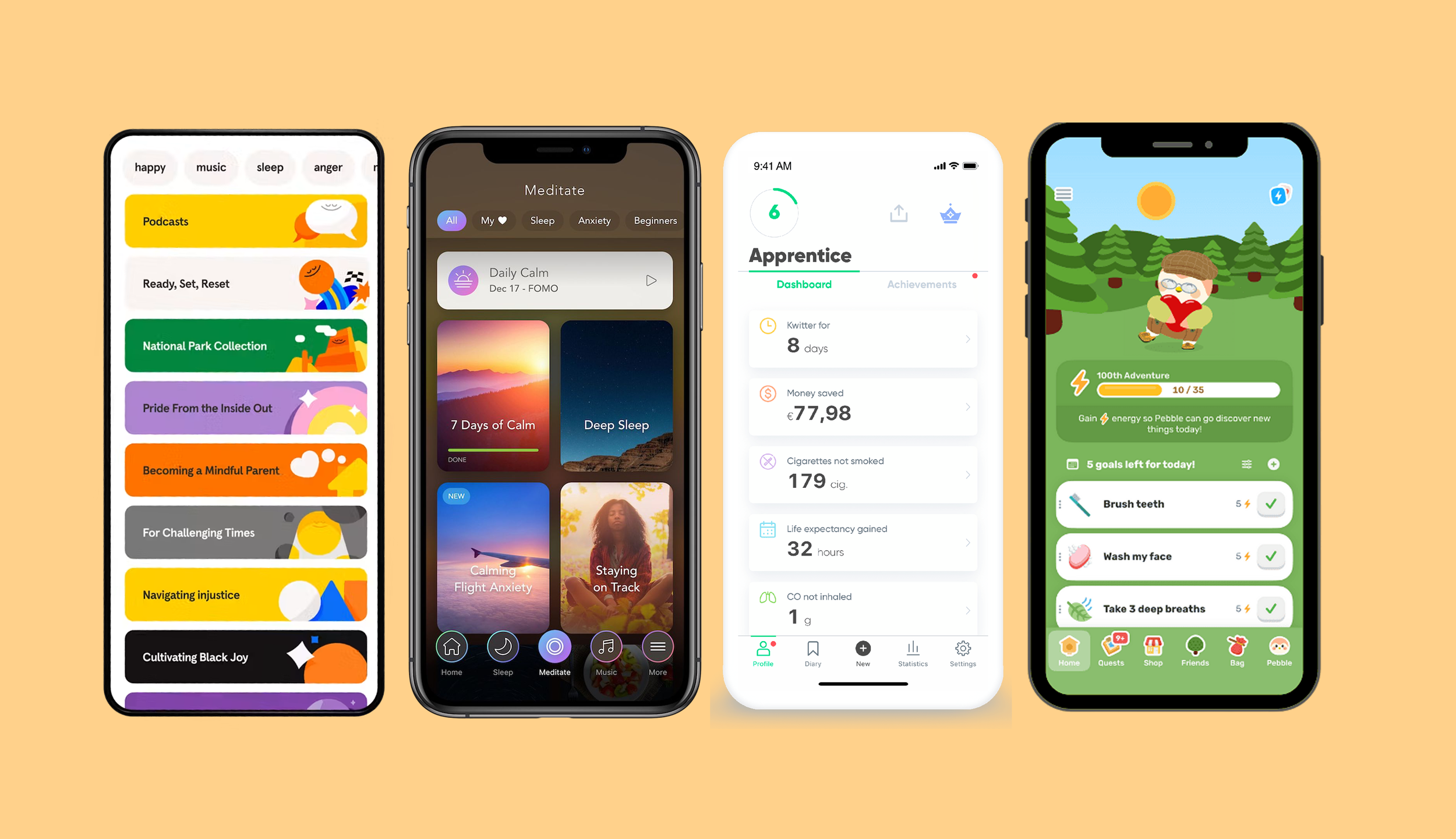
Competitive Analysis
I looked at two meditation apps (Headspace and Calm) and two habit-building apps (Finch and Kwit). They were all well-designed and had structured practices (meditation sessions, courses, streaks). Finch, in particular, had a gamified, companion-driven approach but none of the apps were built for in-the-moment stress. -
![]()
Primary Research
I conducted six one-on-one, in-person interviews with adults aged 25–50, each lasting 30–45 minutes. -
![]()
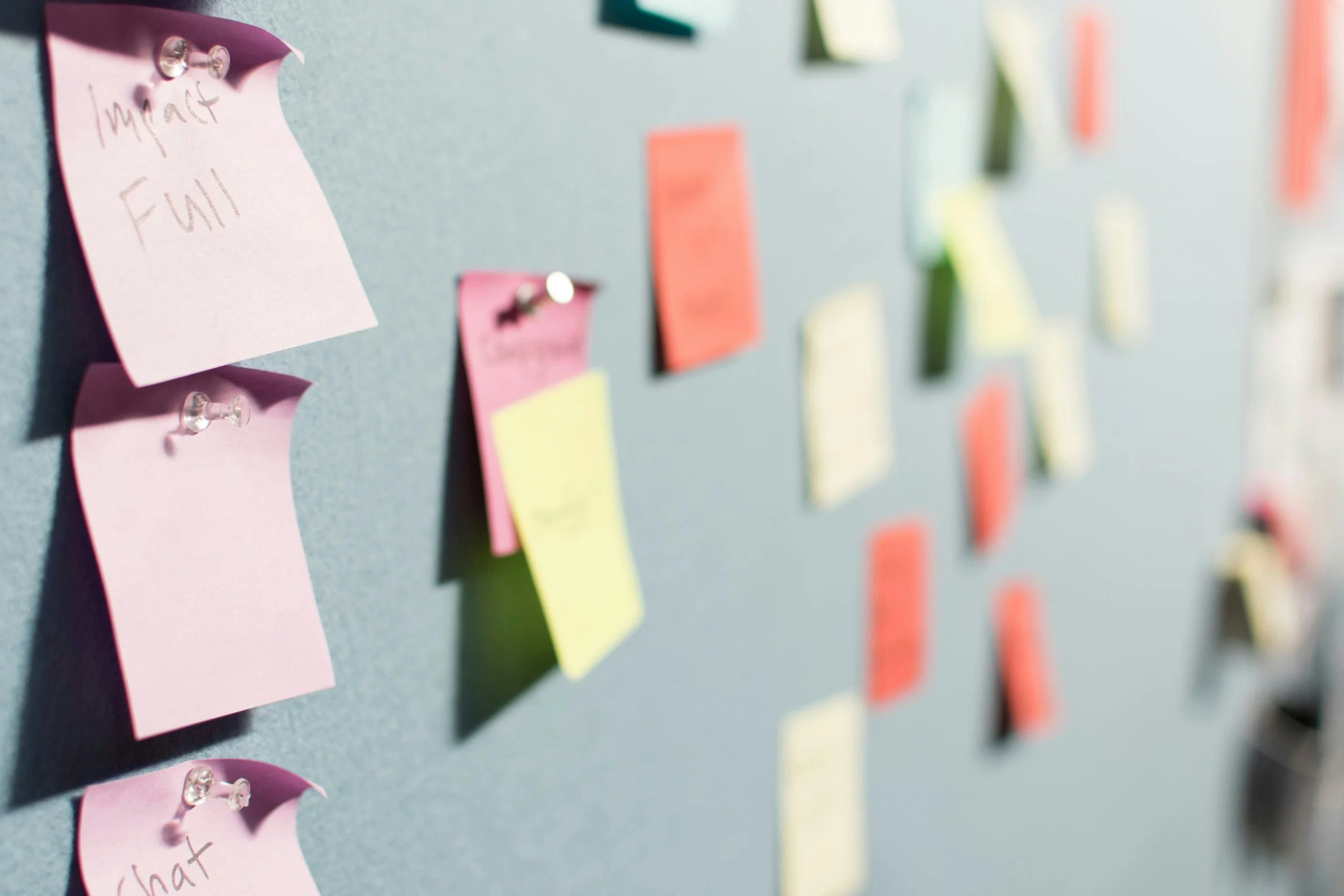
Affinity Mapping
Unpredictability of life was the #1 stress trigger.
Meditation apps got abandoned ("only works temporarily"); doom-scrolling actively added stress.
“Changing scenery” (walks, nature, TV, music, games) helped, more than sitting still and "trying" to relax.
A catch-22 around support. People wanted to talk to someone but held back, afraid of being a burden.


These insights reframed the design brief into three concrete opportunities.
-
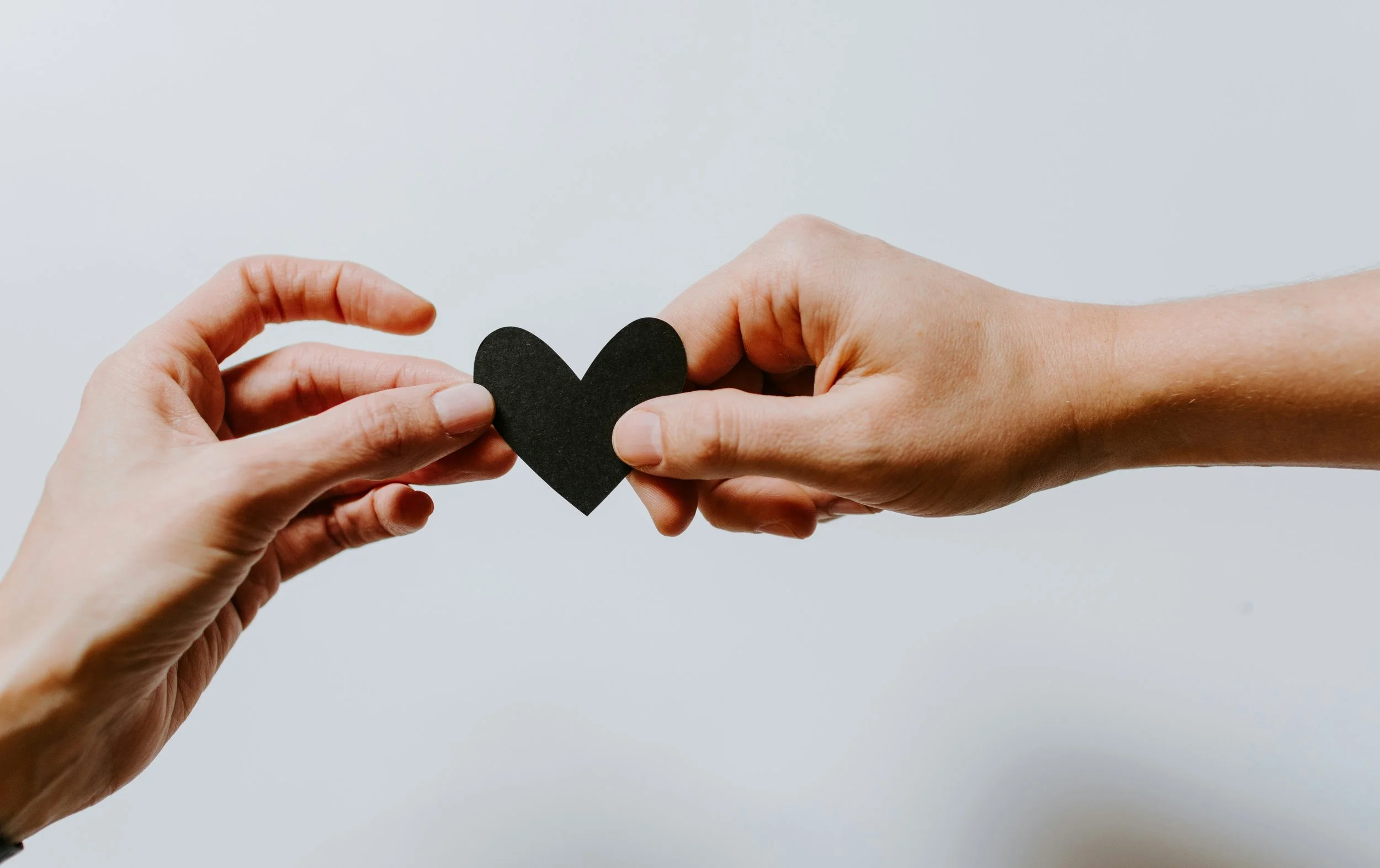
Social Support
How might we reduce anxiety around reaching out for social support?
-

Change of Scenary
How might we encourage a "change of scenery" as a coping strategy?
-
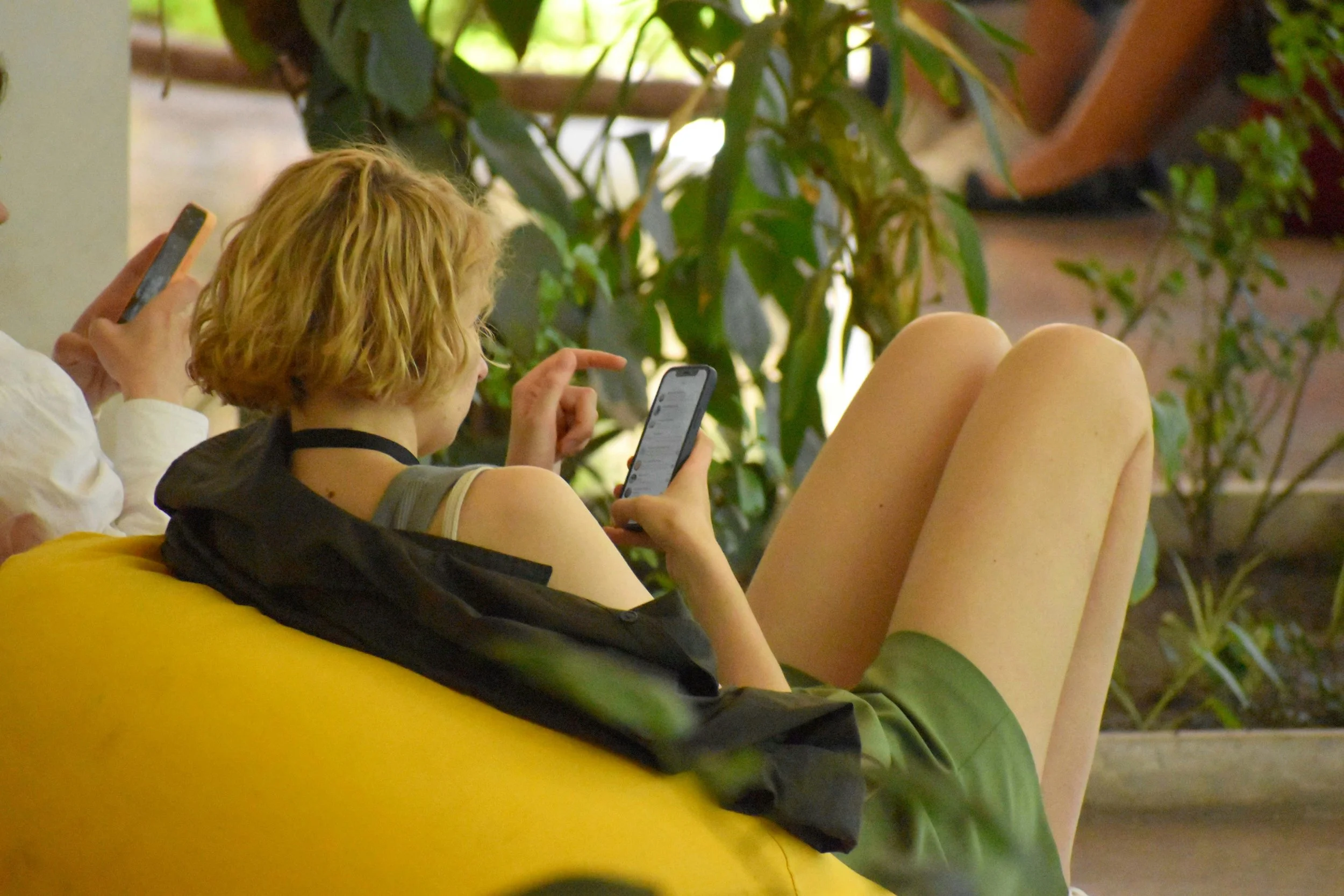
Happy Scrolling
How might we replace doom-scrolling with a "happy scrolling" alternative?
Meet Larissa (Persona)
A 46-year-old stay-at-home mom of 3 in Denver.
“I don’t want to figure stuff out when I’m stressed out!”
Stressed by constant, unpredictable demands of parenting
Quietly compares herself to other parents on social media
Wants connection but finds it hard to ask for help, so when overwhelmed defaults to doom-scrolling - which only deepens the stress

From Insight to Concept
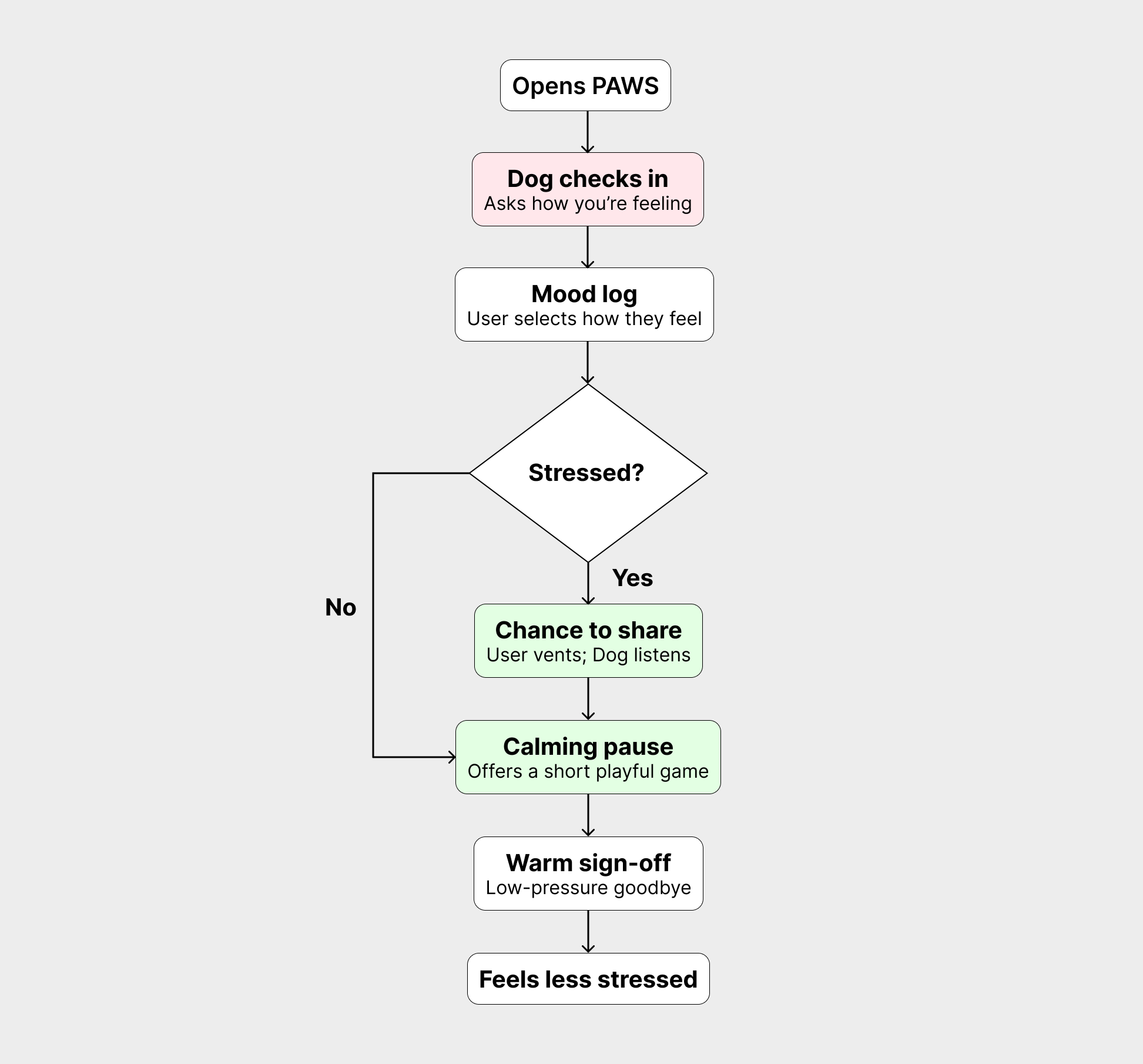
I kept picturing Larissa: stressed, doom-scrolling and avoiding the very people who could actually help. The question was: what would get her to put the phone down? Not a meditation timer (that’s like “work”) and definitely not another to-do list.
I sketched it as a quick storyboard:
Larissa's overwhelmed and scrolling.
She opens PAWS.
Instead of asking her to sit still and breathe, a cute dog checks in on her mood and nudges her toward something small and playful, with no effort or willpower required.
A few minutes later, she's calmer, and it didn't feel like she "did" anything.
How PAWS Works
-
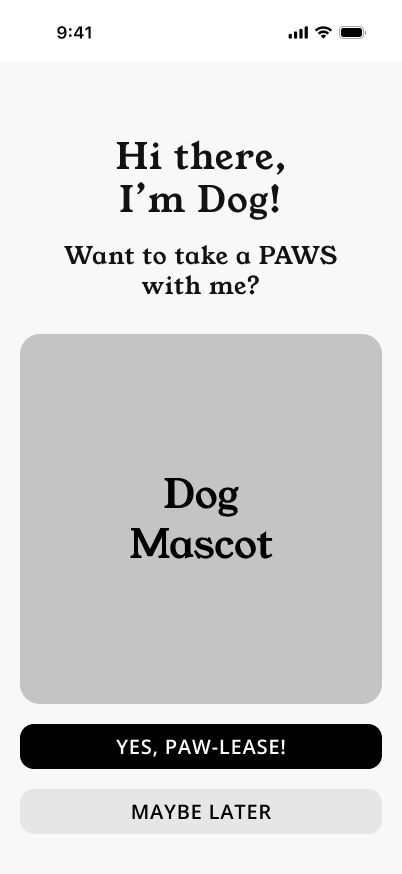
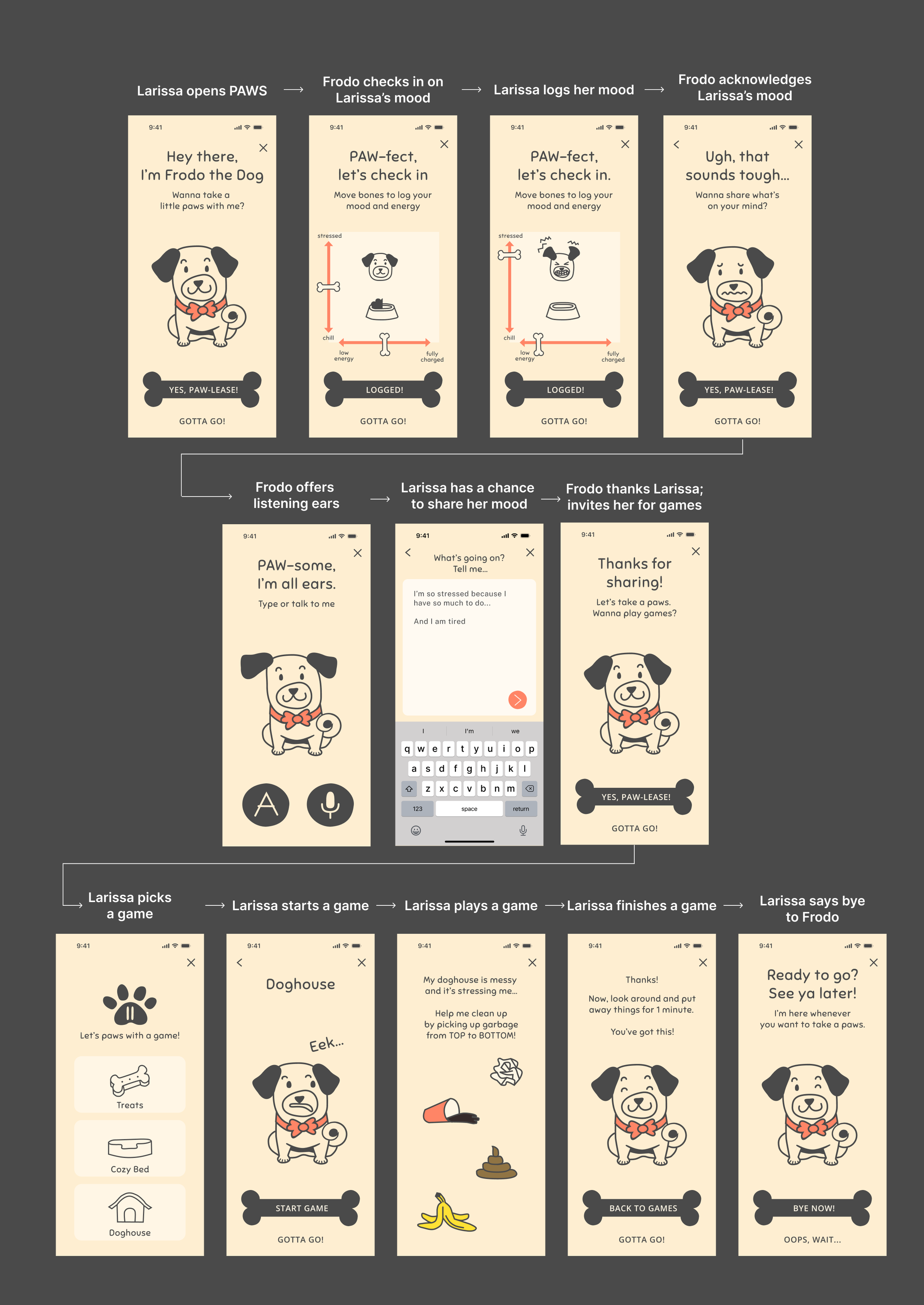
Larissa is overwhelmed and doom-scrolling. She decides to open PAWS.
-
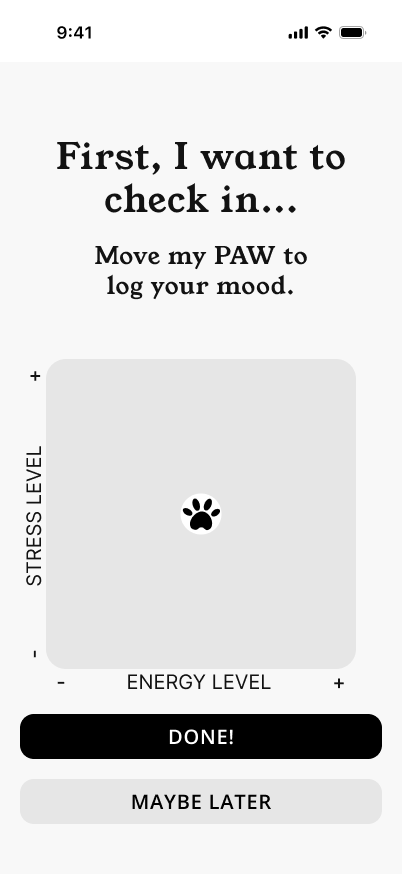
Dog checks in and asks how Larissa is doing. Larissa logs her mood.
-
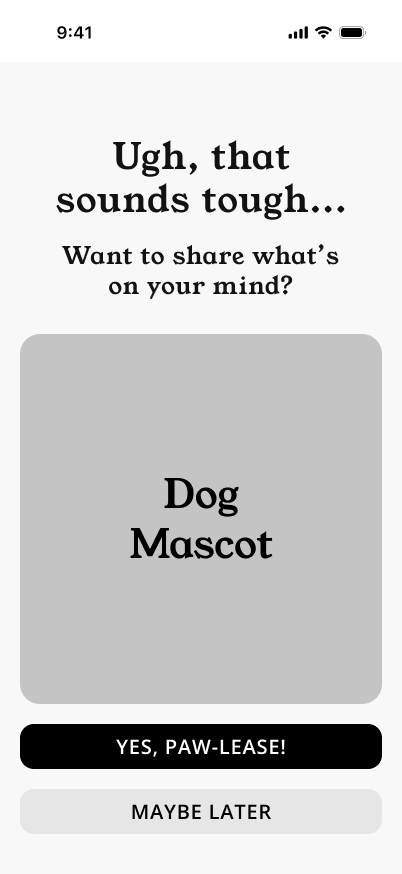
Dog validates Larissa’s mood. She feels seen.
-
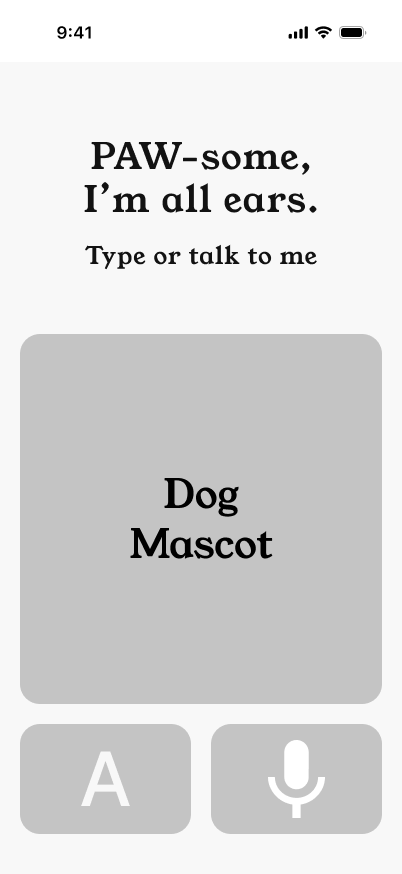
Larissa can vent without worrying about being a burden on friends and family.
-
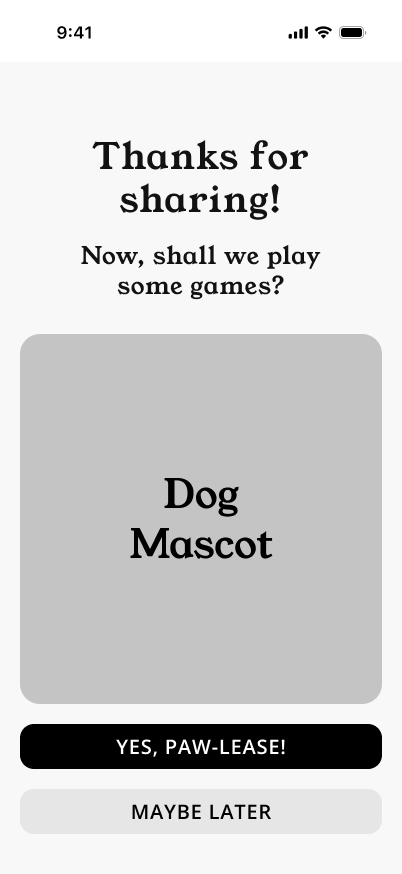
Dog offers a calming game as a “pause”.
-
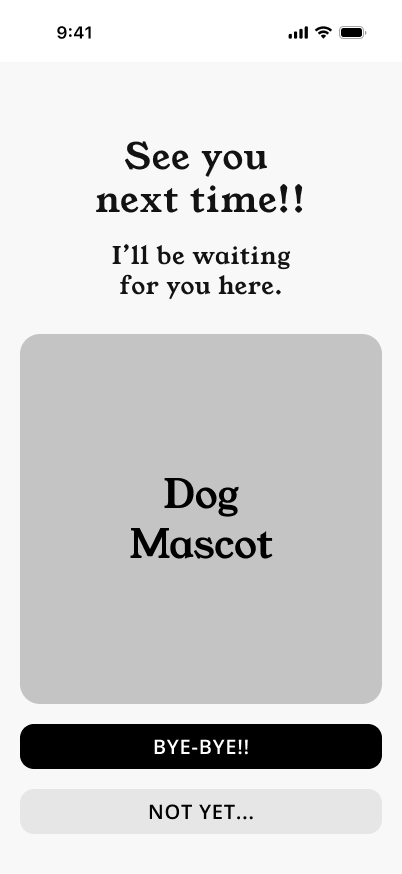
PAWS ends with a warm, low-pressure sign-off. After the “pause”, Larissa feels less stressed.
Design Process
-
![]()
Core Values
Playful, inviting, and simple - never clinical. I wanted PAWS to feel emotionally warm and functionally simple to reinforce the principle “pause, not work”. -
![]()
Logo
For an app designed for stressed users, it was important to have simplicity - hence, the literal combination of two familiar symbols: a paw print and a pause icon. -
![]()
Meet Frodo, Our Mascot
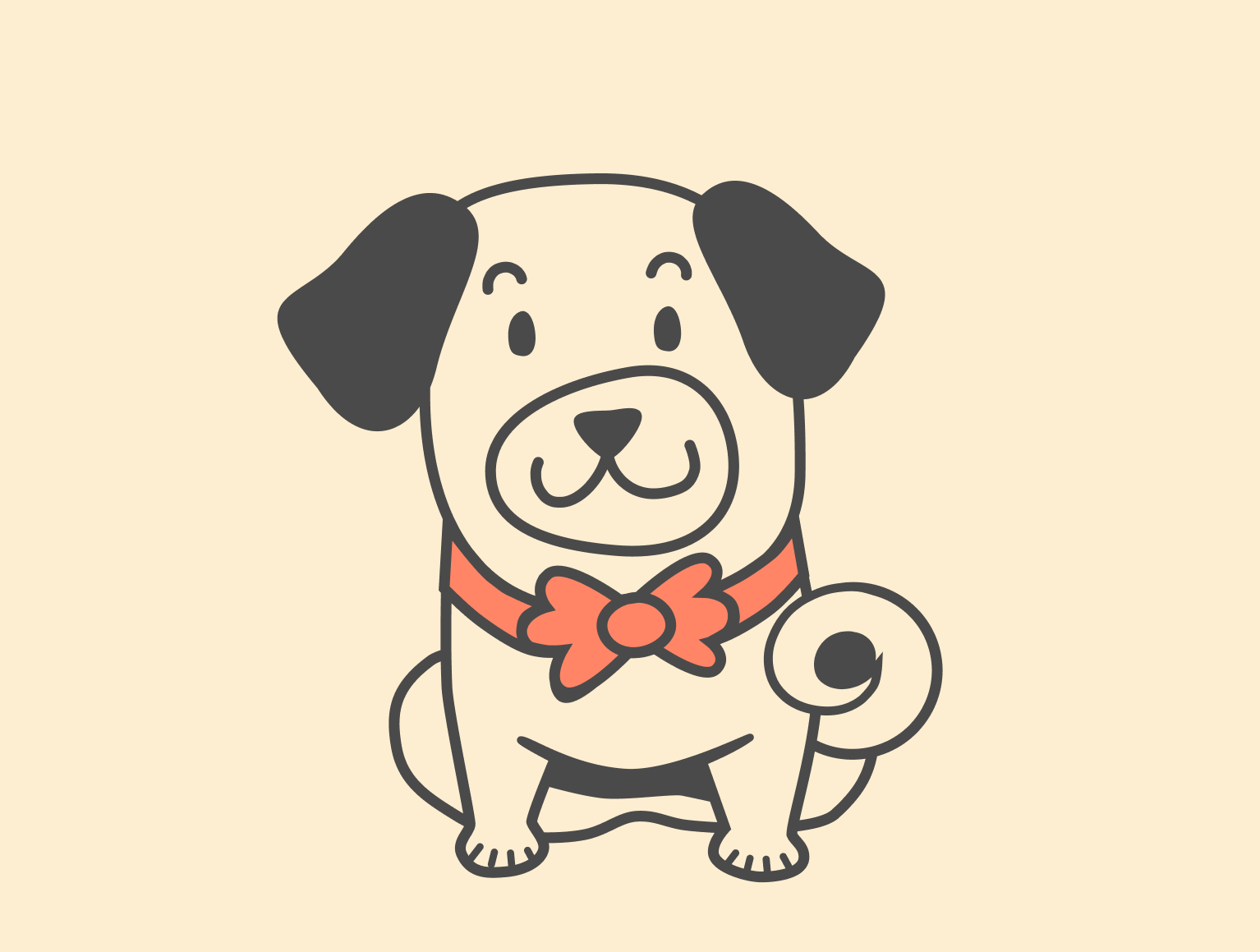
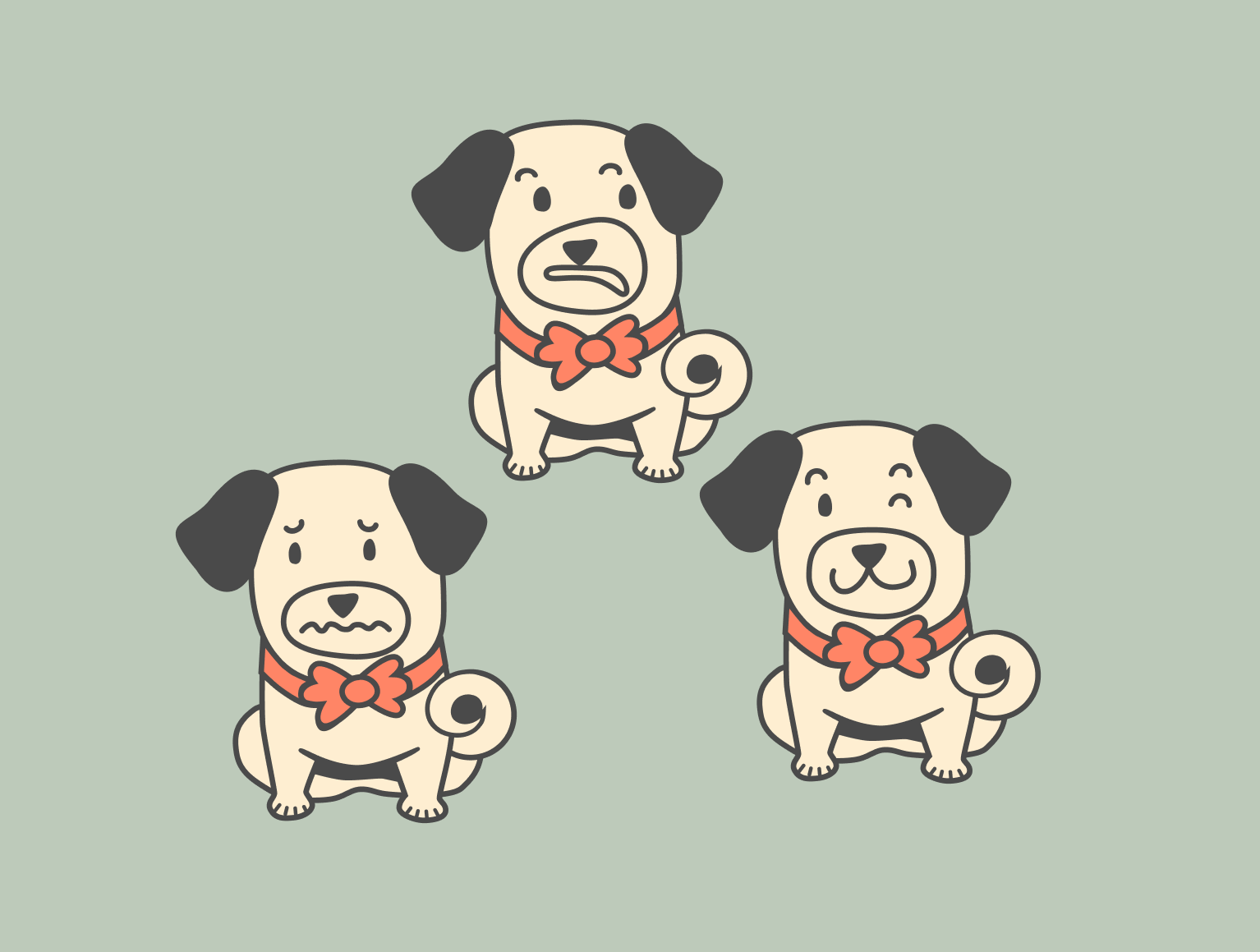
Our emotional support character. Round face, floppy dark ears, a little red bow tie, expressive brows - his soft, rounded shapes make him feel safe and non-judgmental. -
![]()
Colors & Typography
Warm, soft tones (cream, charcoal, coral) feel calming. A bubbly font (Sniglet) for the dog's dialogue is paired with a clean sans-serif (Open Sans) for user-facing UI, visually separating “this is Frodo talking” from “this is you interacting with the interface”.


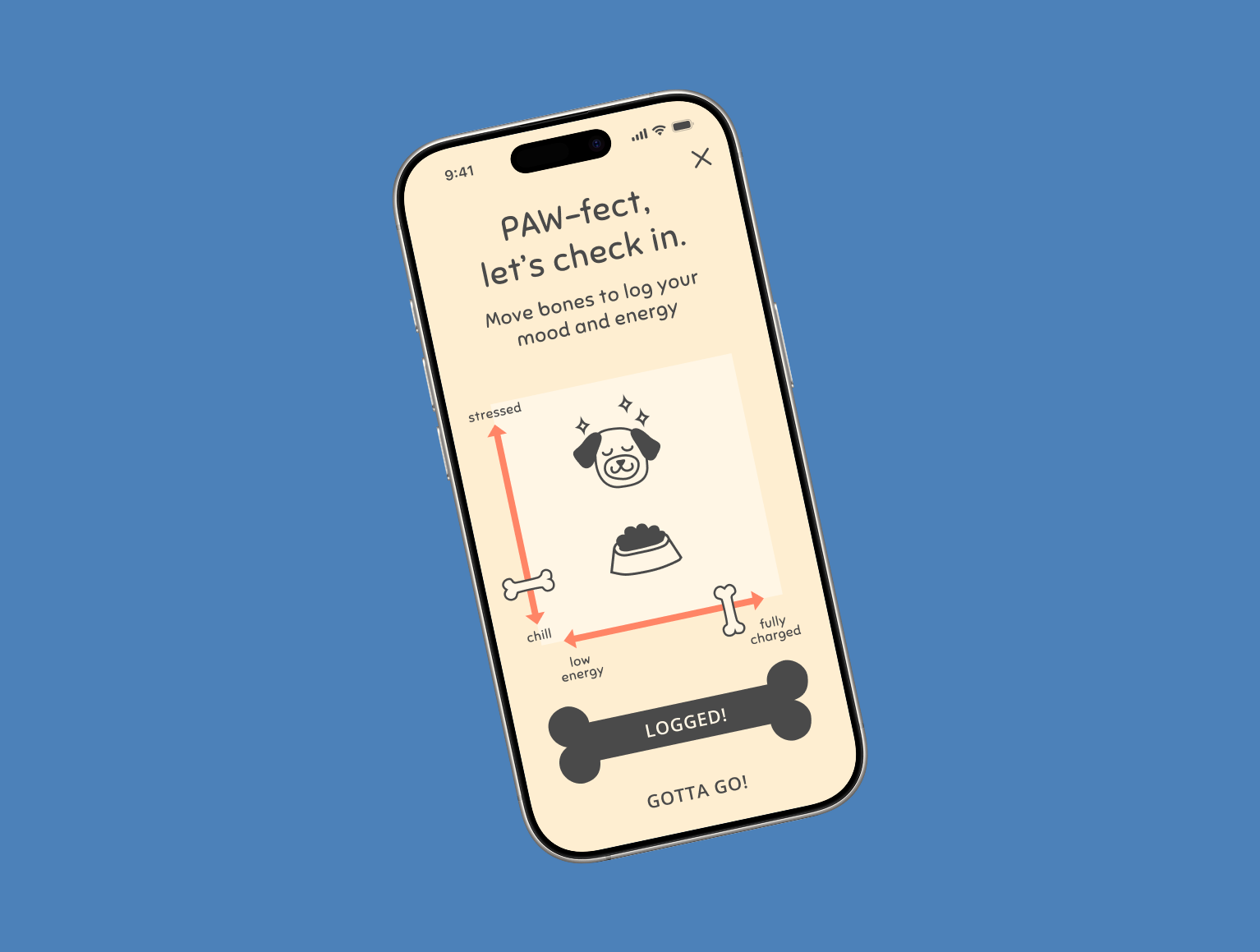
Prototype
Testing Prototype with Users
-
Usability Testing
I tested the Figma prototype with five adults (25–50) on an iPhone, checking for
Task friction
UI clarity
Whether they felt calmer afterwards
Whether the dog felt supportive
-
What Worked
The app felt simple, calm, and emotionally safe.
Frodo was a real emotional anchor, with testers spontaneously comparing him to the Duolingo owl and a Tamagotchi.
Several could see themselves using the app.
-
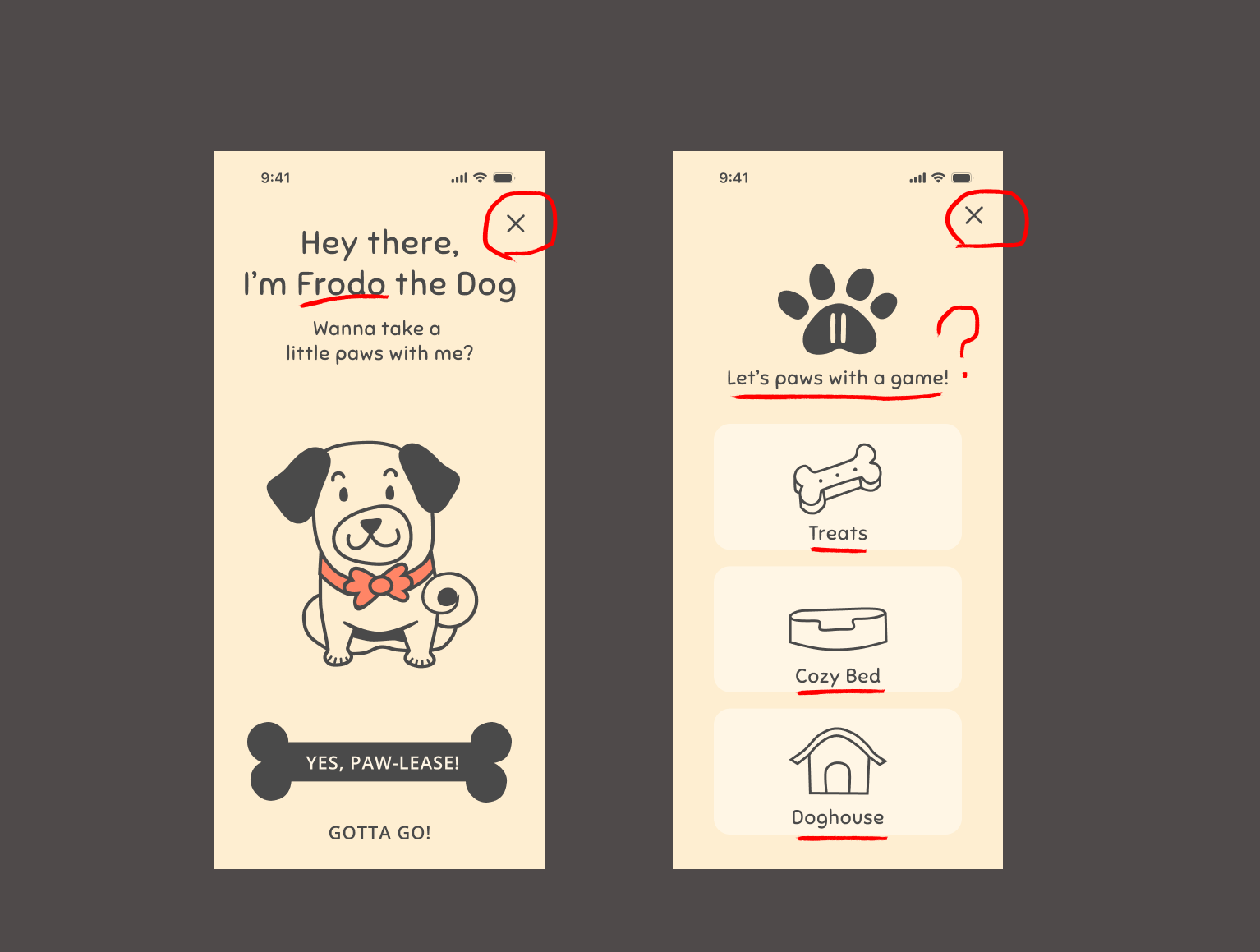
What Didn't Work
Poor name recall. Only 1 of 5 remembered "Frodo", despite him carrying most of the emotional weight.
Confusing game selection. Unclear what games offered; testers wanted one-line descriptions.
Redundant controls. Both "X" and "Gotta go" to exit felt duplicative.
Iterating Prototype Design
Reinforced Frodo’s name across more screens to make it more memorable.
Redesigned game selection with a clear direction and descriptions.
Final Design & Reflection
"Helpful" and "another task" look identical from outside, but users spot the difference instantly. Existing tools I studied asked something of people right when they had the least to give. PAWS flips that: you show up and Frodo decides for you.
If I kept building this, I'd tackle the catch-22 that people had around “reaching out to friends and family” from my interviews. PAWS sidesteps social connection rather than solving it - and that’s the biggest opportunity left on the table.